November 22 – 24, 2025
Panel at the 22nd AHRA Conference: Conceptualizing Environments. Continuity and Change
together with Chelsea Spencer, Columbia University
Property Claims: Legal Fictions of Environmental Control
In our panel, we pose that architecture and planning rely on the fiction that land can be made into a controlled, demarcated space—an environment. A key gesture in this operation is the property claim. Sustained through rhetorical power, formal administration, spatial demarcation, architectural inscription, or else physical violence, the redundancy of such claims also demonstrates their inherent fragility. It is through the performance, reiteration, and defense of property claims that land is staked out as a controlled environment. Thus, we ask: How have architecture, architectural media, and architectural history been mobilized to produce and reproduce the fiction of land ownership and environmental control? Insofar as property claims are narratives about particular places, how might they be understood as architectural histories of environmental control? Or conversely, how might architectural history be read as rehearsing claims to property, to the control of particular environments?
Panelists:
The Agricultural Concession and the Commoditization of Land in the Dutch East Indies, Robin Hartanto Honggare
The illusion of control: Empire turning native in Eastern Frontiers of colonial India, Debasish Borah
Claims to Space: Resettlement’s Statistical and Architectural Media, Irina Chernyakova
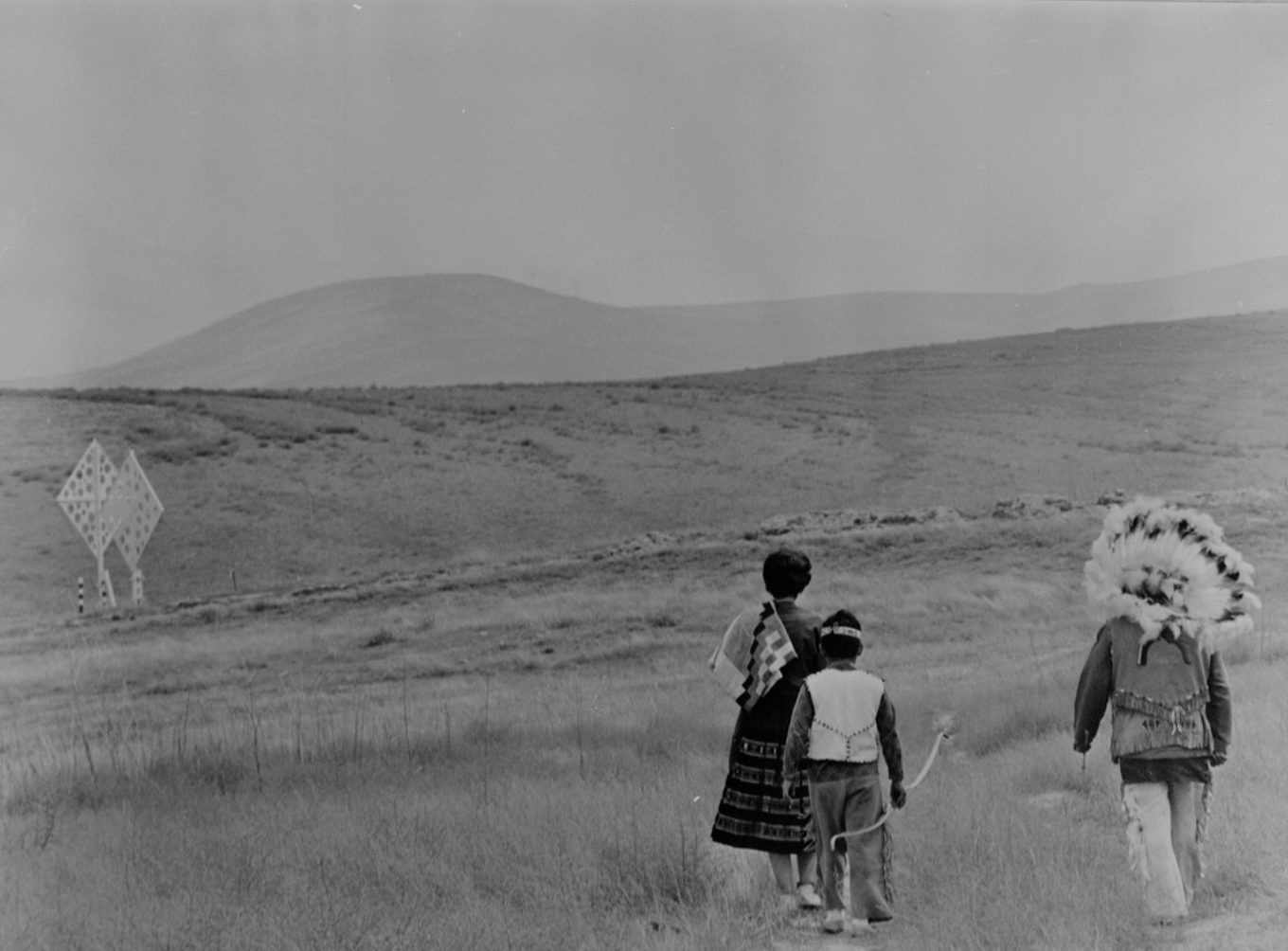
(c) University Archive, Special Collections and Archives, UC Irvine, University of California


(c) University Archive, Special Collections and Archives, UC Irvine, University of California
November 6 – 7, 2025
Paper Presentation at the Institute of Habsburg and Balkan Studies of the Austrian Academy of Sciences and the Institute of Art History, Czech Academy of Sciences, Vienna
California’s Calculated Campuses: Bureaucratic Ecologies of Planning, 1947-1959
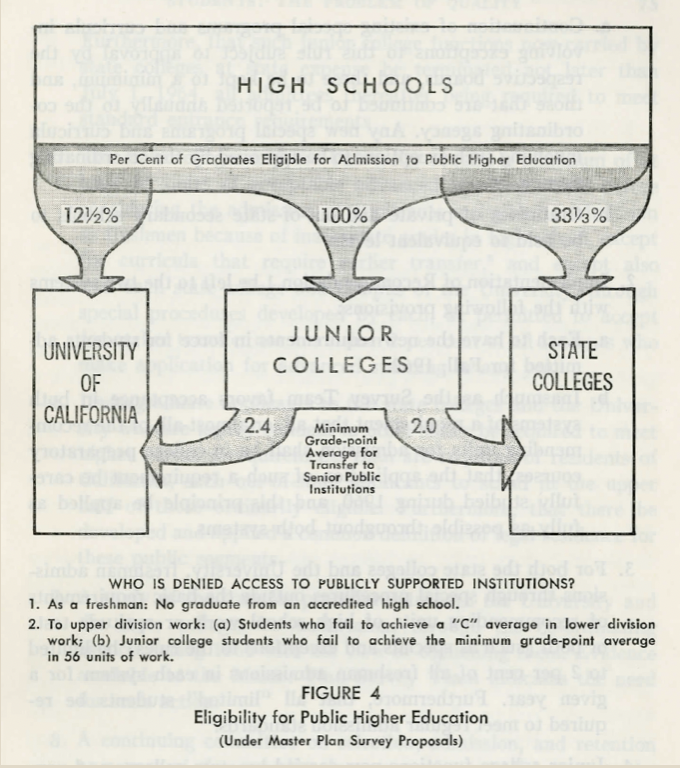
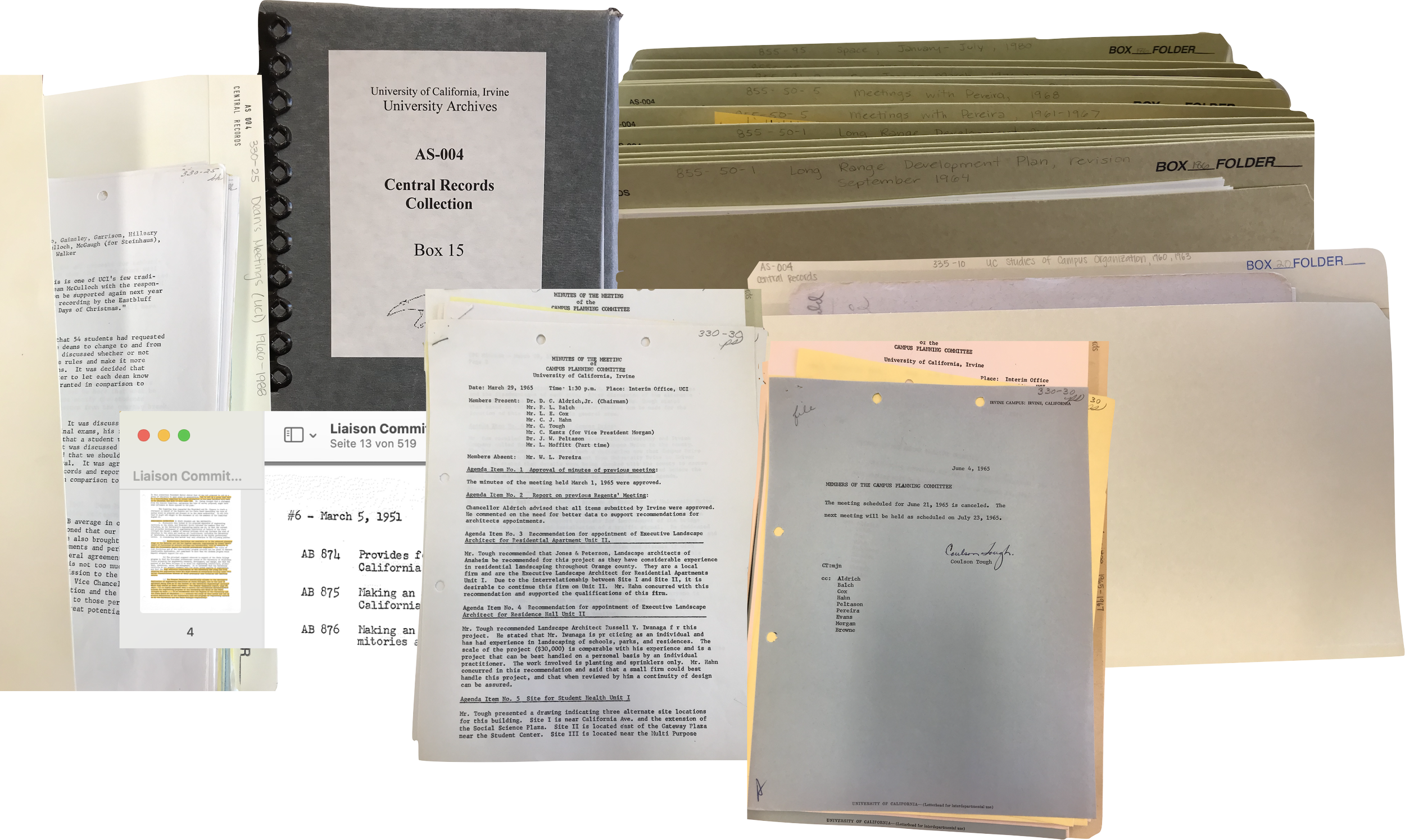
As part of the conference “Architecture and the Power of Bureaucracy,” held at the Postal Savings Bank in Vienna, I will talk about my research on California’s higher education planning bureaucracy. Taking higher education planning studies as a rather unlikely source for architectural knowledge, I analyze aspects of the so-called Master Plan for Higher Education (1960) to showcase how bureaucrats and state administrators thought about space–and planned it–with instruments they were familiar with. Therefore, I focus on tables, diagrams, calculations and maps as information carriers about space and eventually campus architecture. The paper shows how these methods functioned both as “rational” tools and rhetoric strategies of self-legitimation, enabling non-architectural experts to transform quantified visions into architectural realities.
July 3 – 4, 2025
Paper Presentation and Peer Discussion at University Bremen
Architekturen ohne Umrisse: Visionäres Berichten im Master Plan for Higher Education, 1960
As part of the Workshop Der Bericht. Theorie und Geschichte einer prozeduralen Textform at University Bremen, I’ll discuss the practices of California’s major higher education planning study, the Master Plan of Higher Education (1960) – which is, with modifications, still in effect today. My paper focuses on the formal, mostly compositional practices of the Master Plan and its politics of “visionary reporting” to intervene into a quantitatively framed crisis with the paper methods its authors, college administrators and bureaucrats, knew best. I aim to show how it used empirical data collections and statistical calculation models not only as “rational” and thus seemingly unassailable planning methodologies, but also as rhetorical means of self-legitimization a massive spatial intervention of new campuses in California.
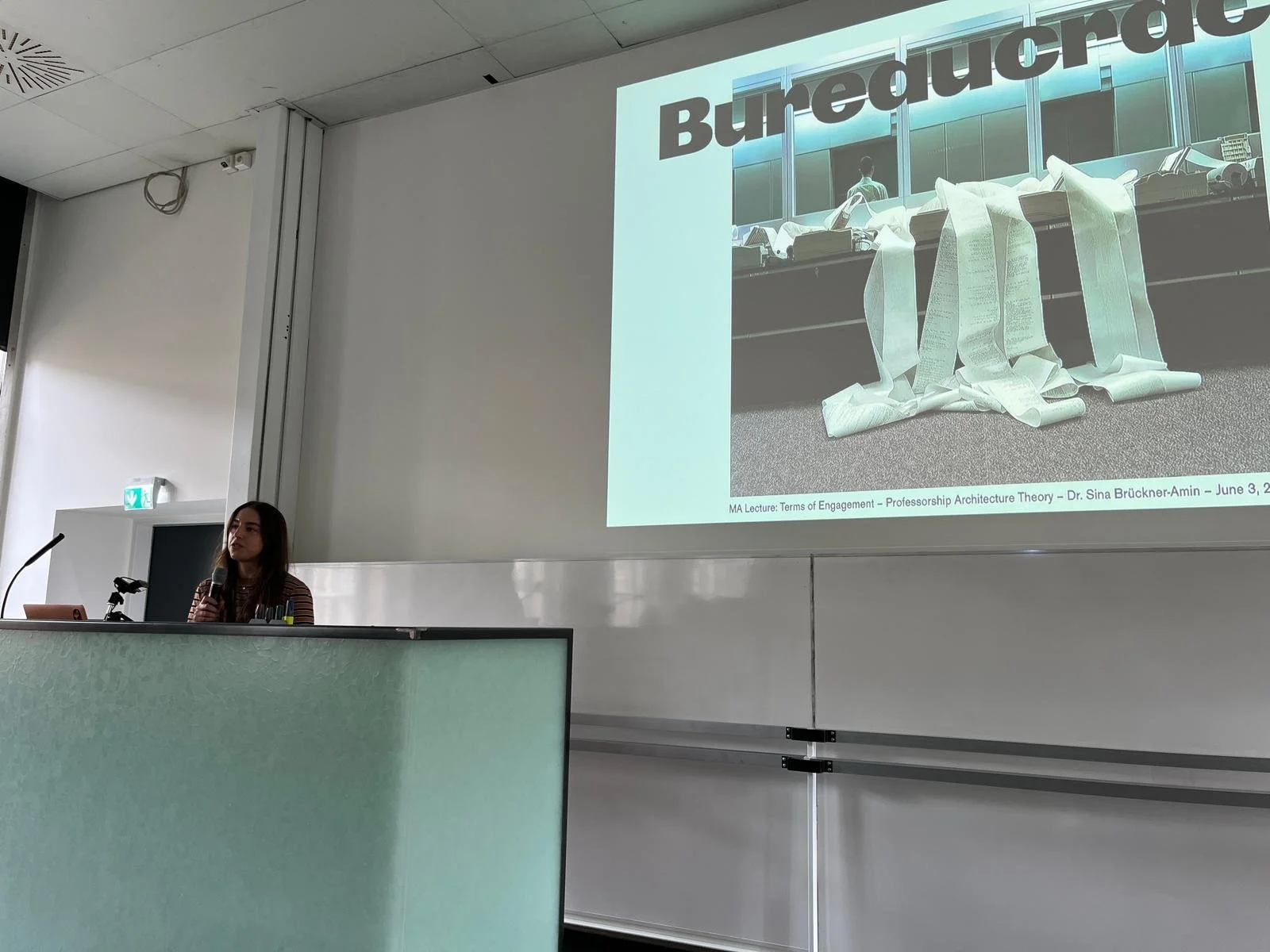
June 3, 2025
Lecture Class at KIT Karlsruhe
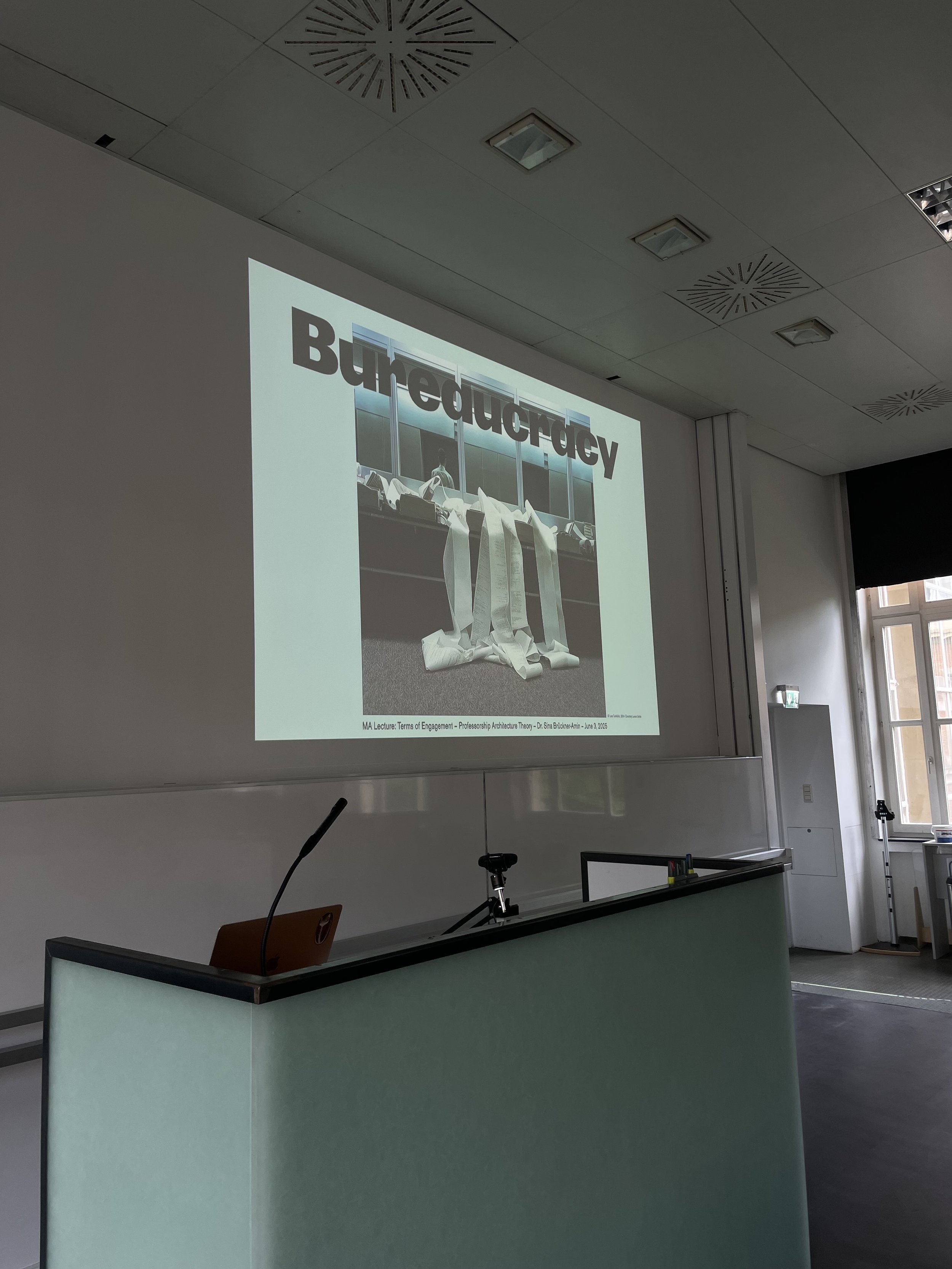
Terms of Engagement: Bureaucracy
In the lecture series for the MA students at the Faculty of Architecture at KIT, we at the Chair Architecture Theory work toward currently relevant key concepts of architectural theory and history. Each lecture presents, examines and scrutinizes one term. By drawing on the knowledge of previous lectures, annotating and expanding it, over the years we build up a dynamic network of terms that challenge us to engage.
As part of the lecture Teresa Fankhänel is giving throughout the Summer Semester 2025, I was invited to contribute one term–and chose bureaucracy. Throughout the lecture I followed a trajectory of looking at architects as bureaucrats to bureaucrats as architects.
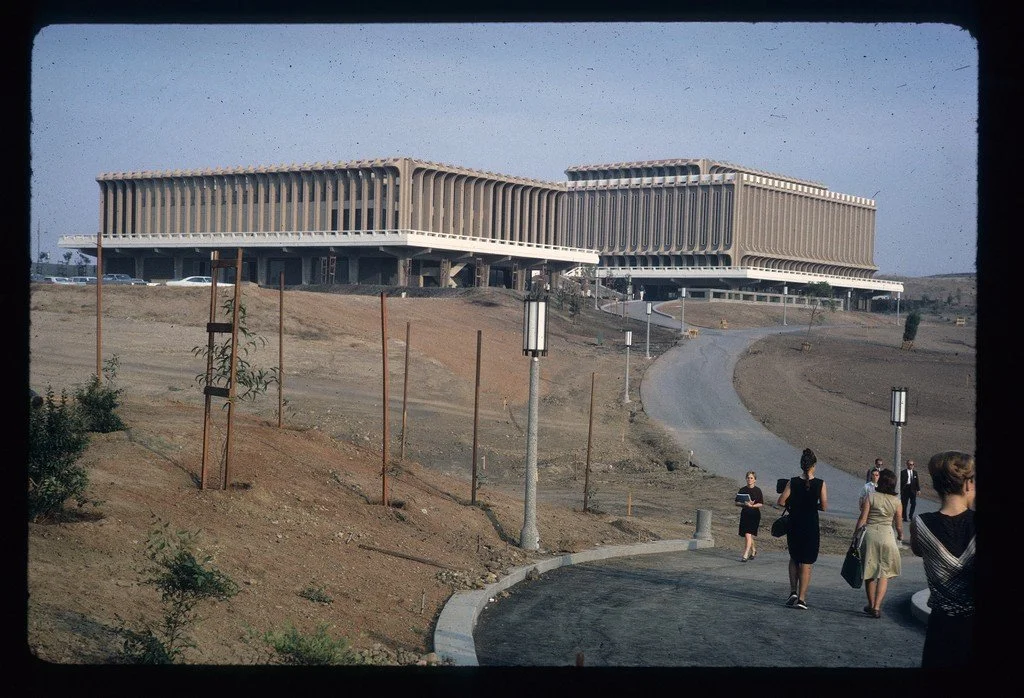

(c) University Archive, Special Collections and Archives, UC Irvine, University of California
April 30 – May 4, 2025
Paper Presentation at 78th SAH Annual Conference, Atlanta, US
Designed Wilderness: The Performance of “Progressive Manhood” at UC Irvine, ca. 1960
As part of the panel Masculinities, Gardens, Landscapes: Negotiating Gender and Nature I discuss the transformations the concept of frontier masculinity, as it was originally formulated by US-American progressive in the late 1800s, underwent in the case of the tenuously orchestrated campus park of UCI on the dry grounds of the Southern Californian Irvine Ranch. Asking what was at stake in the planning of UCI and how particularly the park had to carry the idea of an educational frontier in spatial form, I argue that this thoroughly constructed landscape enabled a designed, essentialized performance of the frontier experience. Following, it argues that the masculinizing qualities of the frontier experience were not gone, but changed: Framed to fit the timely spirit of progress and its rendering of manhood as the discoverers of new (knowledge) worlds in the Space Age.
February 12 – 14, 2025
Paper Presentation at the University of Copenhagen
Radicalism’s Frontier: UC Irvine, the Farm and the Quest for Institutionalized Dissidence
At the Conference The Counter University. Histories, Politics, Aesthetics, I presented a paper discussing UC Irvine and the Social Science Farm as two sides of the same coin: The ambition for a radical and experimental place of learning that relied on the paradox of institutionalized dissidence. Analyzing the two institutions’ intricacies in pedagogy and self-narrative on the basis of archival materials, I argue that they did not coexist in actual opposition to each other, or any “traditional” universities, but as differentiated manifestations of extended attempts at shaping and controlling education and student subjects in times of unrest. As such, my contribution foregrounds the conflicted realities of an apparently progressive endeavor in order to disentangle it from the dominant narrative about its time: the long, “experimental” and “utopian” 1960s in California.
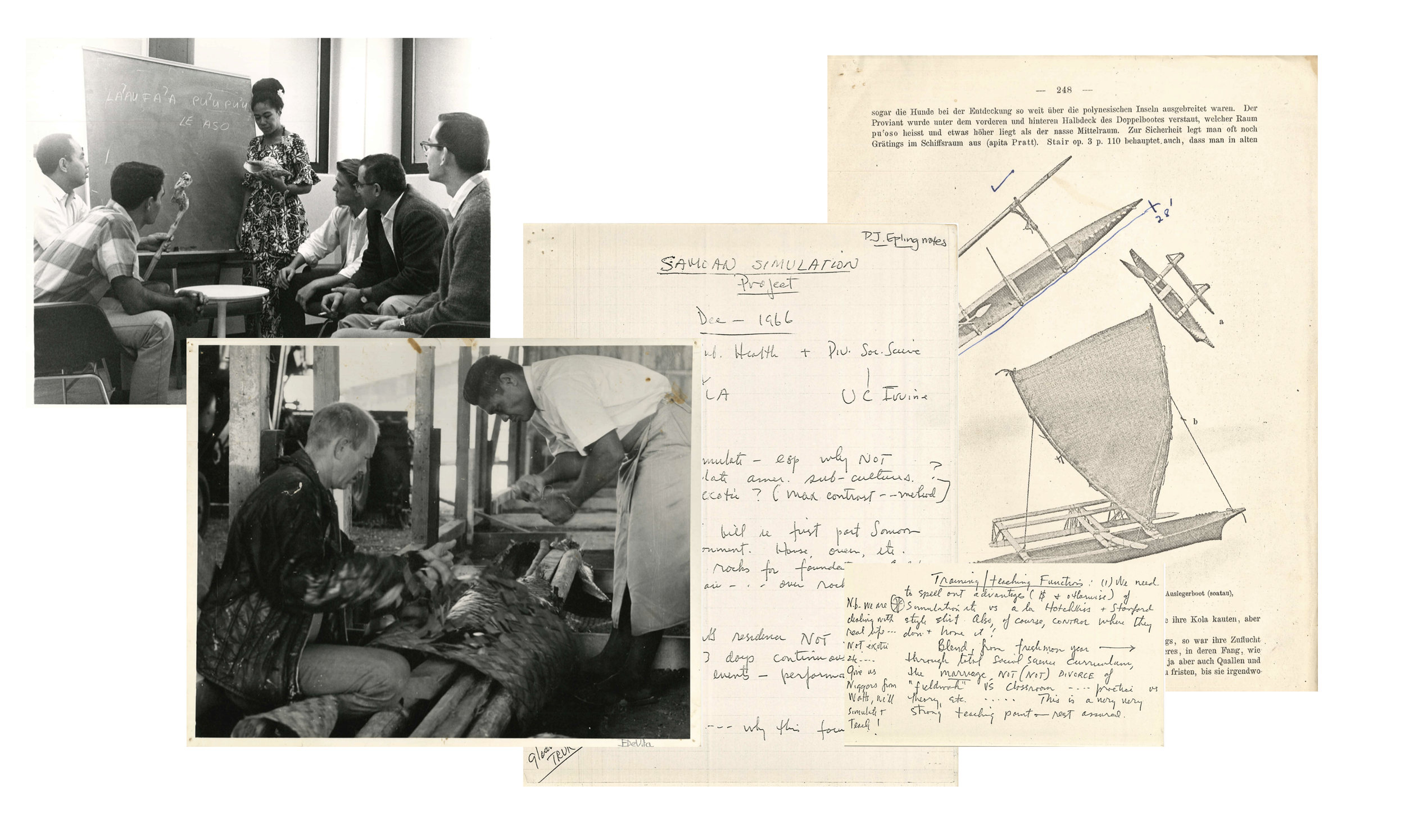
(c) University Archive, Special Collections and Archives, UC Irvine, University of California
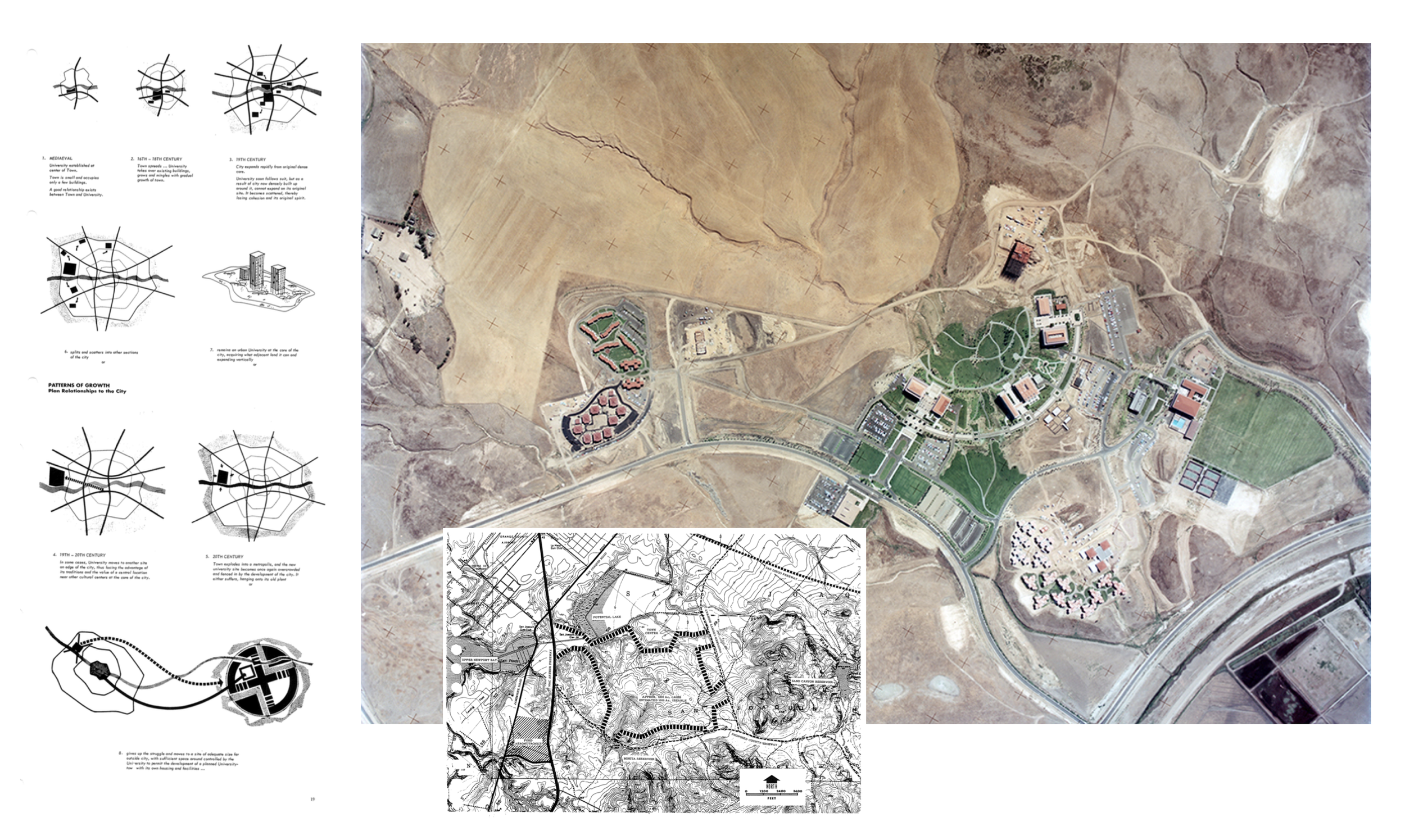
(c) University Archive, Special Collections and Archives, UC Irvine, University of California
December 7, 2024
Guest Lecture at UCLA, Los Angeles, US
Sprawling Systems: Data-Fueled Planning for UC Irvine from the Master Plan for Higher Education to the Irvine Ranch
Following an invitation from Ayala Levin, Associate Professor of Architecture at UCLA, I contributed a short lecture to her MA class. Presenting UC Irvine and the Master Plan of Higher Education as an early, analogue case of data-based, algorithmic planning, I argued that it were its distinctly “rational” methods of planning that allowed for the grand-scale intervention on the Irvine Ranch in form of a new campus development–which resulted in a full-scale community development today known as the City of Irvine.