DFG Scientific Network
Impact Research in Architecture and Urbanism
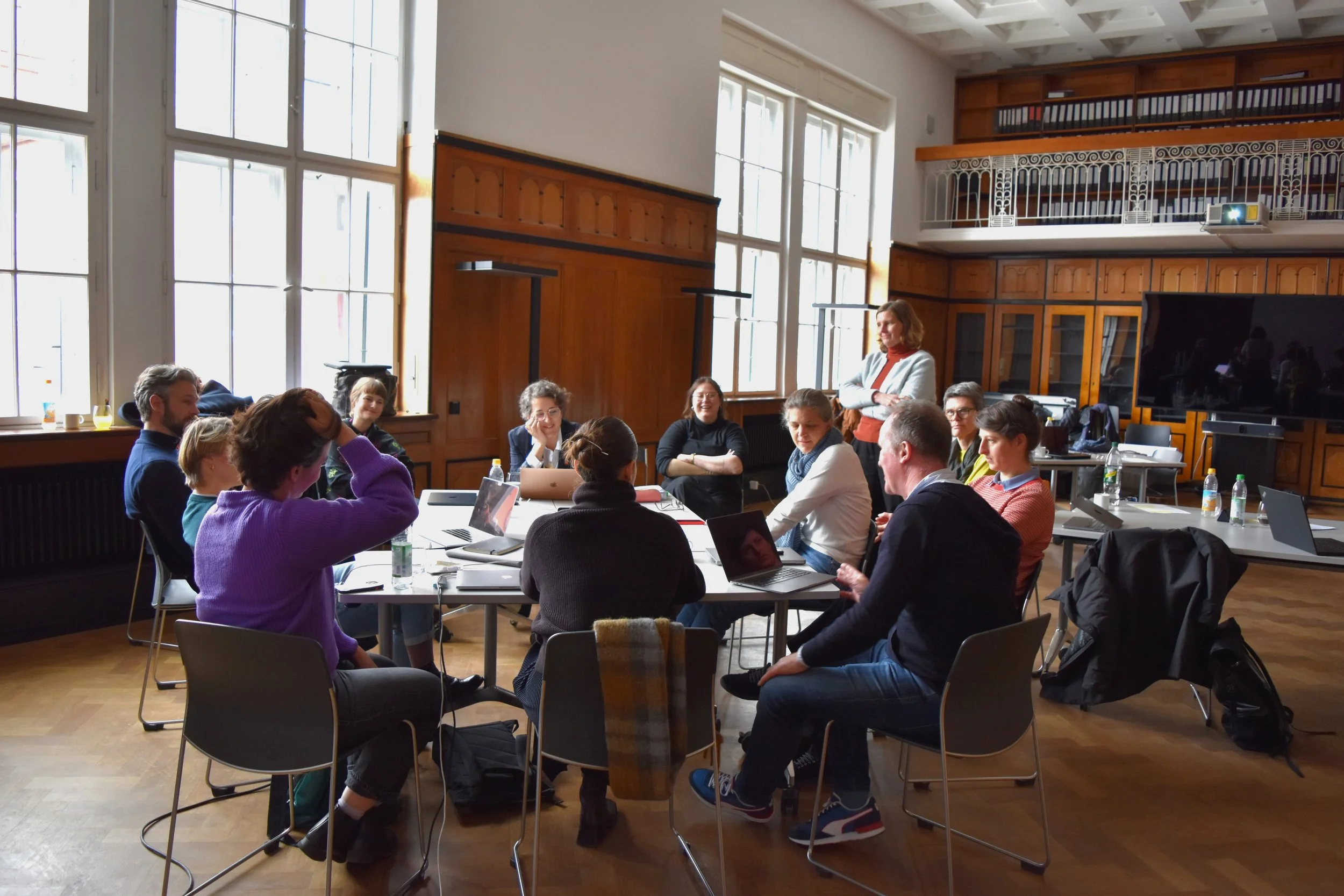
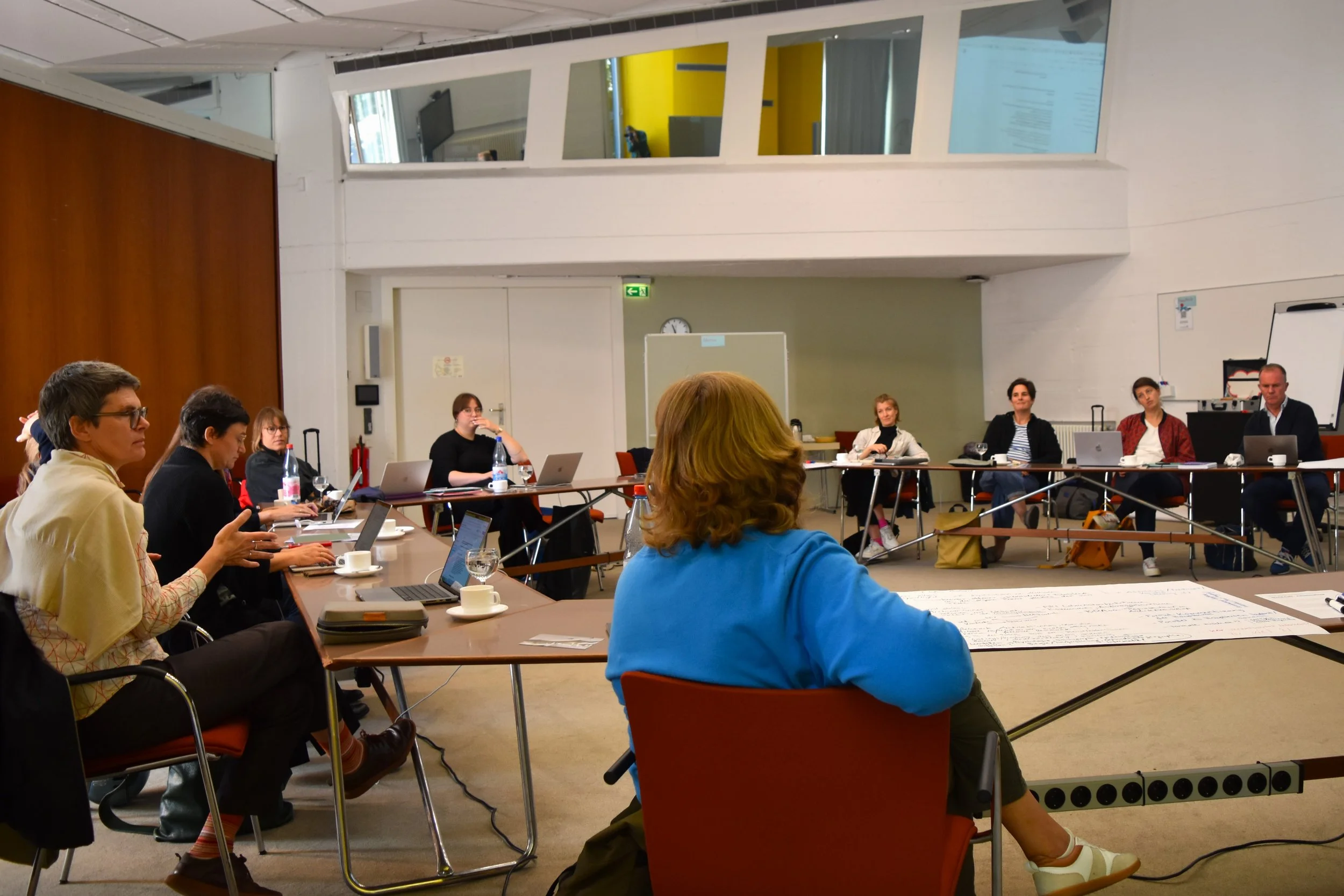
Since 2023, I administratively co-lead the DFG funded Research Network titled WAS: Wirkungsforschung in Architektur und Städtebau together with Leonie Plänkers (TU Darmstadt) and Nina Gribat (BTU Cottbus). The group of now 16 researchers came about a workshop Leonie and I organized as part of the LOEWE Cluster Architectures of Order in 2021. We meet once every semester for an intensive two-day workshop organized around a method, an architectural scale, or both. Coming from many different disciplinary backgrounds, our network brings together researchers working in the fields of architecture practice, history and theory, urban planning, sociology, environmental psychology, human geography, and landscape design.
Project Description
The conception of architectural and urban planning as well as public open spaces such as parks and squares is usually associated with ideas regarding the social, societal, cultural, political and identity-related effects to be achieved. So far, however, there has been no specification of the actual fields of impact and the research methods and theories that can be used to study them.
The network Impact Research in Architecture and Urbanism: Interdisciplinary Theories and Methods responds to this clear need for definition work for the concept of the effects of the built environment and bundles knowledge that is scattered across disciplines and focuses on specific fields of impact: on conscious and unconscious perceptions by individuals, on individual or collective patterns of behavior and use, and on the effects that architecture has in spheres such as the economy, social affairs and culture. In this way, the network focuses its research interest less on the intentions of actors during the design or planning phase of architecture, which have been thoroughly studies to date. Impact is understood as a multi-scalar process in which the short, medium and long-term effects of a built configuration can only unfold in the context of specific framework conditions.
The aim of the network is to bring together the various understandings of impact in an integrated concept within three years. Impact is understood as a multi-scalar process in which the short, medium and long-term effects of a building configuration can only unfold in the context of specific framework conditions.
Six meetings of the network will discuss impacts in a matrix of different scales and fields of impact. In order to make these as compatible and productive as possible, the areas of impact are defined as perceptions, emotions, practices and behaviour, images and discourses as well as economics and politics. On the one hand, the meetings examine specific theoretical and methodological aspects of research into effective architectures, which are oriented towards a scale sequence from the interior to the building to the urban space. On the other hand, at each meeting the network considers a selection of related but as for now unconnected disciplinary approaches: actor-network theory and practice theory, environmental neuroscience and architectural psychology, architectural history and oral history, impact research and perceptual psychology, qualitative and quantitative social research as well as atmospheric research and phenomenological approaches. The network will present the results of their joint work in an anthology, which will provide a collective perspective on the theoretical and methodological principles of impact research as an empirical branch of architectural science.